


No products in the cart.

Service Dog Training: Requirements, Costs, and How to Start
Service dogs provide life-changing assistance to individuals with disabilities. From alerting to a drop in blood sugar, to providing deep pressure therapy during a panic attack, these dogs are highly specialized medical equipment. I’m Maria Rodriguez, a certified canine behaviorist, and I’ve spent over a decade preparing dogs for these exact roles. However, the path to achieving a fully trained working dog is long, expensive, and rigorously demanding.
What Exactly is a Service Dog?
There is a lot of confusion surrounding the terminology. Under the Americans with Disabilities Act (ADA), a service animal is defined specifically as a dog that has been individually trained to do work or perform tasks for an individual with a disability. The task(s) performed must be directly related to the person’s disability.
Emotional support animals (ESAs) provide comfort simply by being present, but they are not trained to perform specific tasks. Because of this, ESAs do not have the same public access rights as service dogs under the ADA.
The Core Requirements of Service Dog Training
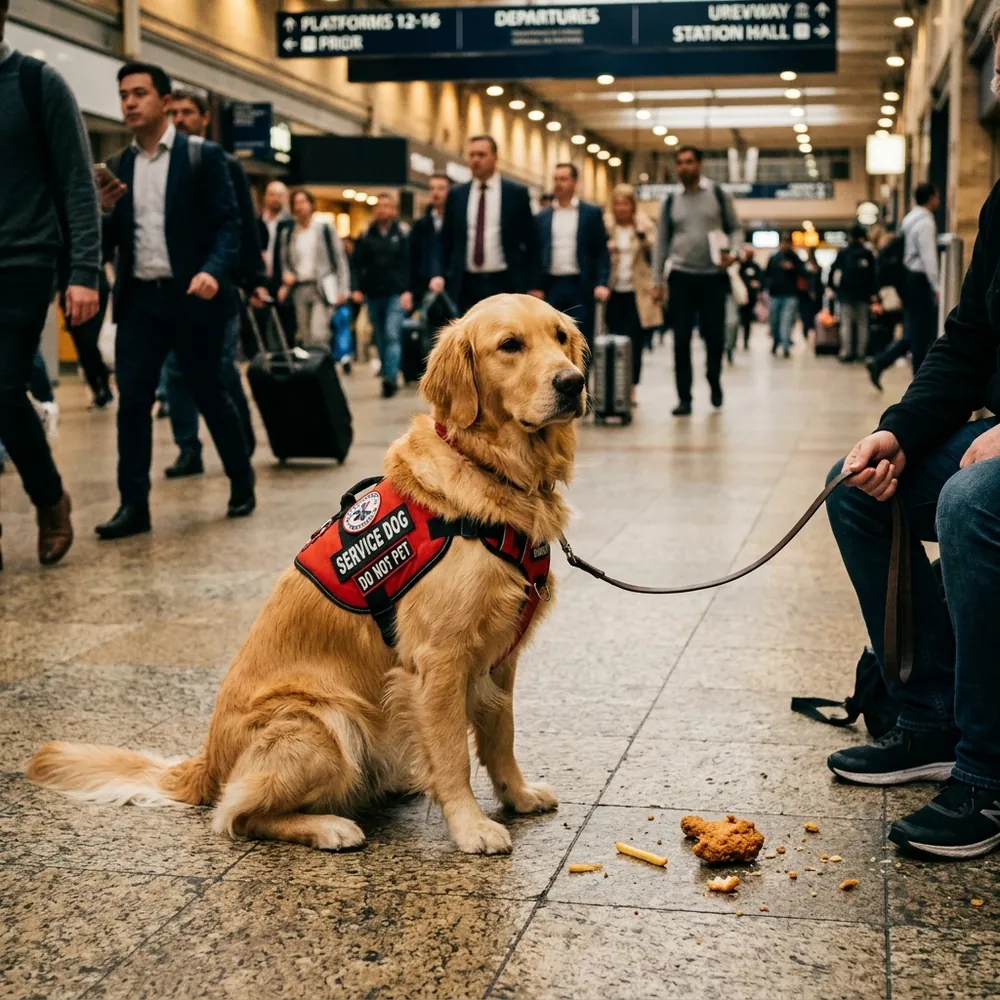
A service dog must be essentially bulletproof in public spaces. This means ignoring food on the floor, loud noises, children running by, and other animals. This level of neutrality is achieved through hundreds of hours of exposure and proofing.
1. Public Access Training
Before a dog ever learns a specialized medical task, they must pass a rigorous Public Access Test (PAT). This ensures the dog can navigate grocery stores, restaurants, and public transit without causing a disruption or exhibiting signs of stress. The dog must walk on a loose leash, hold long stays under distraction, and recover quickly from sudden startles.
2. Task Training
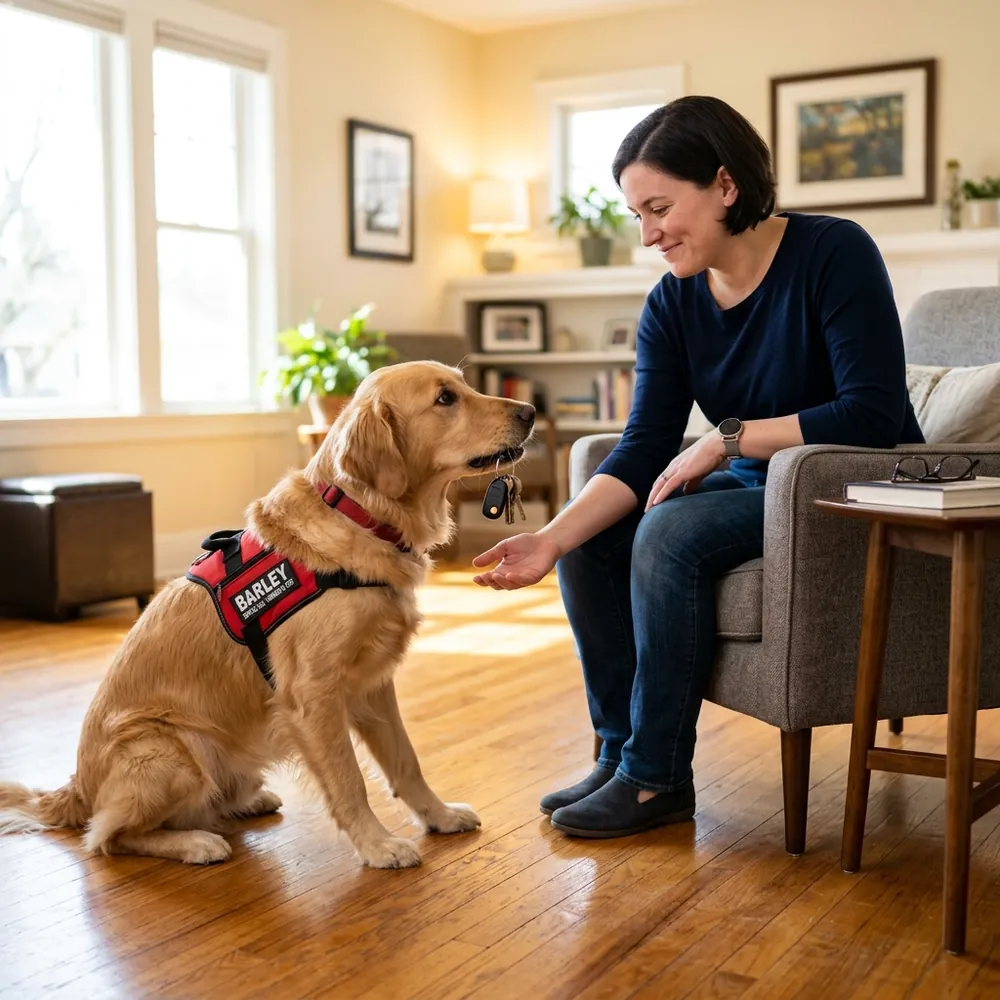
Task training is the final and most specialized phase. This is where the dog learns the specific behaviors required to mitigate their handler’s disability.
- Medical Alert: Training the dog to smell chemical changes in the handler’s breath or sweat, signaling an impending seizure or blood sugar drop.
- Mobility Assistance: Training the dog to retrieve dropped items, open doors, or act as a brace for balance.
- Psychiatric Tasks: Training the dog to interrupt self-harming behaviors, provide deep pressure therapy (DPT), or guide a disoriented handler to an exit.
The Costs and Time Investment
A professionally trained service dog from a reputable organization typically costs between $15,000 and $30,000. This immense cost covers the dog’s acquisition (often purpose-bred), veterinary care, housing, and the 18 to 24 months of daily professional training.
Owner-training is a legal option in the United States and can significantly reduce financial costs, but the time investment is astronomical. You must be prepared to dedicate 1-2 hours every single day for two years. Furthermore, the “wash rate” (dogs that fail to meet the rigorous standards and must be rehomed as pets) is over 50%, even for purpose-bred puppies.
Frequently Asked Questions (FAQ)
Do I need to carry certification for my service dog?
No. Under the ADA, there is no recognized or mandatory national registry or certification process for service dogs. Websites selling ID cards and certificates are scams. Business owners are only legally allowed to ask two questions: Is the dog a service animal required because of a disability? And what work or task has the dog been trained to perform?
Can any breed be a service dog?
Technically, yes. However, the “Fab Four” (Golden Retrievers, Labrador Retrievers, Poodles, and Collies) are vastly overrepresented because of their biddability, stable temperaments, and appropriate size for mobility work. Attempting to train a protective breed (like a Malinois or Cane Corso) or an independent breed (like a Husky) drastically increases the likelihood of the dog washing out.
