


No products in the cart.

Positive Reinforcement Dog Training: Why It Works
If you’ve spent any time researching how to train a puppy, you have undoubtedly come across the term “positive reinforcement.” But what does it actually mean? Is it just bribing a dog with cookies? Not at all. Positive reinforcement dog training is a scientifically proven methodology that builds confidence, accelerates learning, and strengthens the bond between you and your dog.
Unlike outdated, punishment-based methods that rely on fear and intimidation (like alpha rolls or leash popping), positive reinforcement relies on behavioral science. When a dog is rewarded for a behavior, they are highly likely to repeat it. It is that simple, yet incredibly powerful.
What is Positive Reinforcement?
In the realm of operant conditioning, “positive” means adding something, and “reinforcement” means increasing the likelihood of a behavior. Therefore, positive reinforcement means adding something the dog loves (a treat, a toy, or praise) immediately after they perform a desired behavior.
- Food Rewards: The most common and effective reward. Use high-value treats like boiled chicken, hot dogs, or cheese for learning new, difficult behaviors.
- Play Rewards: For dogs with high prey drive (like Terriers or Herding breeds), a quick game of tug can be more reinforcing than a treat.
- Life Rewards: Sitting politely at the door is reinforced by the door opening to go for a walk.
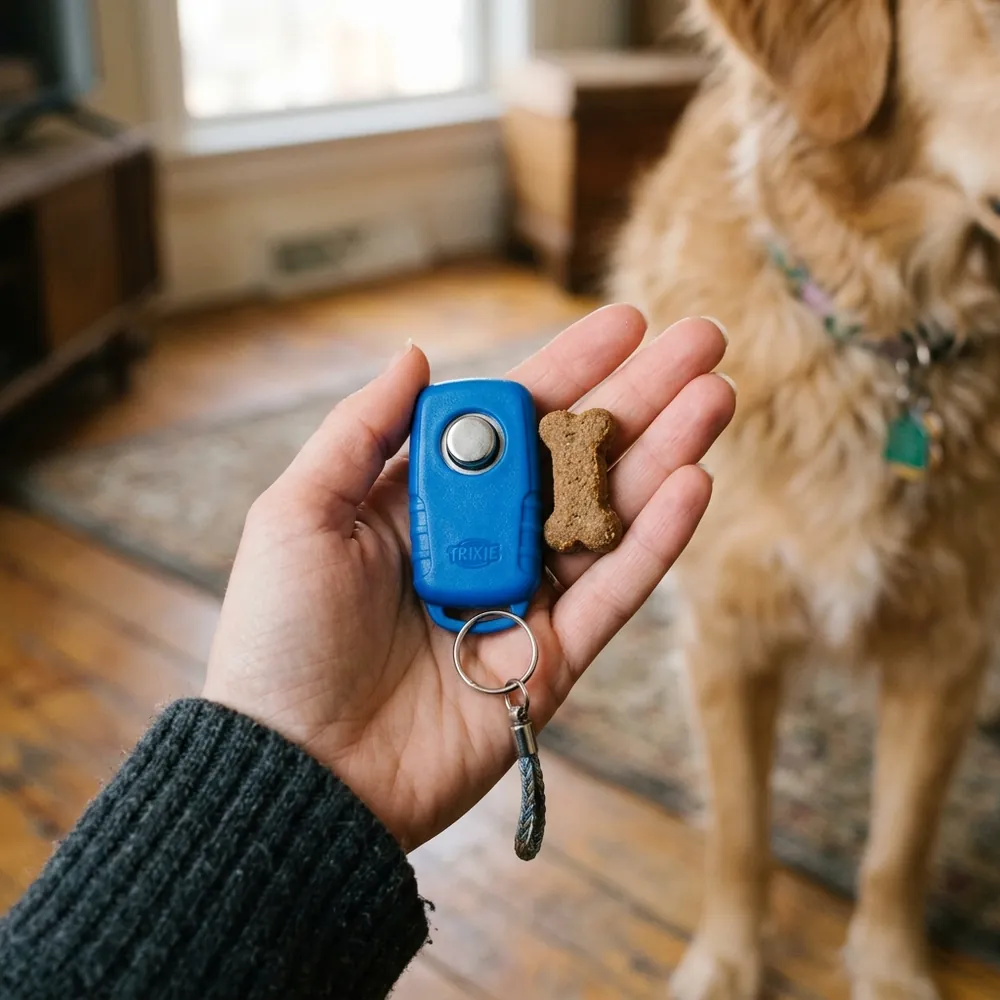
The Power of Clicker Training
A clicker is a small mechanical box that makes a sharp “click” sound. It is a vital tool in positive reinforcement dog training. Why? Because timing is everything. If you ask your dog to sit, and they sit, but then stand back up before you hand them the treat, you just rewarded them for standing up!
The click bridges the gap. It tells the dog, “Yes! That exact moment your rear end hit the floor was correct, and a treat is coming.” You “load” the clicker by clicking and immediately feeding a treat dozens of times until the dog makes the association.
Common Myths About Positive Reinforcement
Myth 1: “You’ll have to carry treats forever.”
This is false. Treats are used heavily in the “acquisition phase” (when the dog is learning the meaning of a word). Once a behavior is fluent, we move to an intermittent schedule of reinforcement. Like playing a slot machine, the dog doesn’t know when the jackpot is coming, so they keep playing the game. Eventually, the treat is phased out entirely in favor of real-world rewards.
Myth 2: “It doesn’t work for aggressive or stubborn dogs.”
Positive reinforcement is the only method recommended by the American Veterinary Society of Animal Behavior for aggressive dogs. Punishing an aggressive dog suppresses their warning signals (growling) and increases their internal fear, leading to a dog that bites without warning. Positive reinforcement changes their emotional response to the trigger.
Frequently Asked Questions (FAQ)
What if my dog isn’t food motivated?
Every living creature is food motivated, otherwise, they would starve! If your dog won’t take treats during training, they are likely either over-stressed by their environment, or the treats you are offering aren’t high-value enough. Ditch the dry kibble and try real meat.
How do I stop bad behavior if I only use positive reinforcement?
We focus on teaching an incompatible behavior. Instead of punishing a dog for jumping on guests, we use positive reinforcement to heavily reward them for sitting on a mat when the doorbell rings. A dog cannot jump and sit on a mat at the same time.
