


No products in the cart.

Dog Training with Shock Collar: A Trainer’s Honest Perspective
Last week, a desperate owner from Rancho Peñasquitos walked into Doggies University carrying a shock collar. “Maria, nothing else has worked,” he said, his voice breaking. “My dog keeps running into traffic, and I’m terrified I’ll lose him.”
I understand that fear. After 15 years training dogs in San Diego, I’ve heard every concern about dog training with shock collar methods. Today, I’ll share what actually works, what doesn’t, and why this topic divides even professional trainers.
Understanding Dog Training with Shock Collar: The Complete Picture
Let me be clear—dog training with shock collar devices isn’t my first choice at Doggies University. However, I believe in giving owners complete, honest information. These tools, properly called e-collars or remote training collars, deliver electrical stimulation to get a dog’s attention.
The controversy is real. Some trainers swear by them, while others believe they cause more harm than good. I’ve seen both outcomes in my career. The difference? It’s almost always about how they’re used, not the tool itself.
Modern e-collars aren’t like the harsh devices from decades ago. Today’s models have multiple settings, from barely perceptible taps to stronger corrections. Think of it like the difference between a gentle touch and a firm handshake.
How to Use a Shock Collar to Stop Bad Behavior: The Right Way
Before you even consider dog training with shock collar methods, understand this: timing is everything. A correction delivered even one second late confuses your dog. They won’t connect the stimulation with their behavior.
I once worked with a Husky named Storm from Scripps Ranch. His owner was using the collar randomly, whenever Storm “seemed” to be thinking about chasing cats. Storm became anxious and unpredictable. We switched to marker training first, teaching Storm exactly what “no” meant before introducing any corrections.
The Critical Foundation Phase
Never—and I mean never—use a shock collar without first establishing clear communication. Your dog must understand basic commands through positive methods. At Doggies University, we require at least six weeks of foundation training before discussing e-collars.
The biggest mistake? Using the collar for how to use a shock collar to stop bad behavior without teaching the right behavior first. If your dog doesn’t know what you want, corrections only create confusion and fear.
Positive E Collar Training: Yes, It Exists
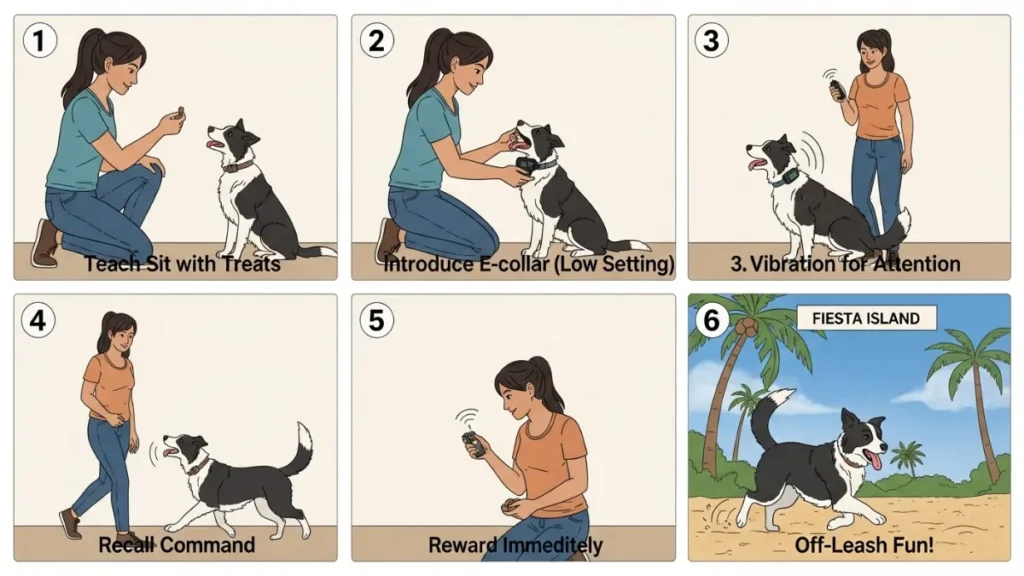
Surprised by that heading? Many people don’t realize positive e collar training is possible. The key is using the collar as a communication tool, not a punishment device.
Here’s how I approach it when necessary. First, we find the dog’s “working level”—the lowest setting they can perceive. For most dogs, this is surprisingly low. My own dog, Canela, works at level 8 out of 100. She barely feels it, like a tap on the shoulder.
We pair the stimulation with known commands. The sensation means “pay attention to me now.” It’s not meant to hurt or scare. When the dog responds correctly, rewards follow immediately—treats, praise, play, whatever motivates your specific dog.
Building Positive Associations
I’ve successfully used positive e collar training with deaf dogs who can’t hear verbal commands. The vibration function becomes their cue system. One Australian Shepherd from Point Loma learned 15 different commands using only vibration patterns.
The goal is never suppression through fear. Instead, we’re creating clear communication across distances. This especially matters in San Diego’s wide-open spaces like Fiesta Island or Cowles Mountain trails.
How to Train a Dog with a Shock Collar to Stay in the Yard
Property boundaries present unique challenges. Many San Diego homes don’t allow physical fences, especially in HOA communities. Owners ask about how to train a dog with a shock collar to stay in the yard, hoping for a magic solution.
Here’s the truth—invisible fence systems have serious limitations. I’ve seen determined dogs run through them chasing squirrels, then refuse to return home because they don’t want another shock. The dog is essentially trapped outside their own yard.
Alternative Boundary Training Methods
Instead, I teach boundary training using flags and positive reinforcement first. We establish clear visual markers and reward the dog for staying within them. Only after months of practice would I consider adding an e-collar as a backup safety measure.
One success story: a Labrador from Del Mar who learned property boundaries using our boundary training protocol. We used the e-collar’s tone function only, pairing it with treats for returning to the safe zone. No shocks needed.
Best Training Collar for Stubborn Dogs: Beyond the Shock
When people search for the best training collar for stubborn dogs, they’re usually frustrated. I get it. Some dogs seem immune to traditional training methods. But “stubborn” often means “highly motivated by something else.”
Take my recent client, a Shiba Inu named Koji from University City. His owner called him stubborn, but I saw a dog bred for independent thinking. Shock collar training would have damaged his trust. Instead, we found what motivated him (cheese and chase games) and made training more rewarding than his “stubborn” behaviors.
Choosing the Right Tool
For truly challenging cases, I might recommend:
- Head halters for powerful pullers
- Front-clip harnesses for reactive dogs
- Long lines for recall training
- Yes, sometimes e-collars for specific safety issues
The best training collar for stubborn dogs is the one that communicates clearly without damaging your relationship. This varies by dog, situation, and handler skill level.
How to Train Dog with Shock Collar – YouTube: The Dangerous Truth
I need to address this directly. Searching “how to train dog with shock collar – YouTube” yields thousands of results. Most are dangerous. Unqualified people demonstrating improper techniques on stressed dogs isn’t education—it’s harmful.
I’ve rehabilitated dogs ruined by YouTube training attempts. One Border Collie from Encinitas developed severe anxiety after his owner followed a video suggesting high-level corrections for barking. The dog stopped barking but also stopped playing, eating normally, and trusting people.
Safe Learning Resources
If you must learn online, look for certified professionals explaining theory first. The Certification Council for Professional Dog Trainers lists qualified trainers who understand learning theory. Videos should show calm dogs, clear explanations, and emphasis on reading dog body language.
Better yet, work with a local professional. Dog training with shock collar methods requires real-time feedback you can’t get from videos.
E Collar Ruined My Dog: Recovery Stories
“E collar ruined my dog” is a heartbreaking search term I see too often. Yes, improper use can cause serious behavioral damage. I’ve worked with dogs who developed:
- Generalized anxiety
- Aggression toward handlers
- Complete behavioral shutdown
- Redirected aggression toward other dogs
One Goldendoodle from La Mesa came to me completely shut down. Previous training used high-level shocks for normal puppy behaviors. She wouldn’t play, explore, or even eat treats. Recovery took eight months of careful confidence building.
The Recovery Process
If you believe an e collar ruined my dog applies to your situation, stop using it immediately. Focus on rebuilding trust through:
- Predictable routines
- Choice-based training
- Plenty of rewards for any engagement
- Professional help from force-free trainers
Most dogs can recover with patience and proper rehabilitation. I’ve seen formerly shut-down dogs return to happy, confident companions.
Shock Collar for Dogs: Making an Informed Decision
The market for shock collar for dogs is overwhelming. Prices range from $25 to $500. The cheap ones are dangerous—inconsistent stimulation levels, poor timing, unreliable controls. If you decide to proceed, invest in quality equipment from established brands.
Features that matter:
- Multiple stimulation levels (at least 50)
- Vibration and tone options
- Reliable remote range
- Waterproof construction
- Safety shut-off features
Remember, the collar is only as effective as the handler using it. Even the best shock collar for dogs can’t replace understanding canine behavior and learning theory.
E Collar Training for Beginners: Essential First Steps
If you’re researching e collar training for beginners, please start here: work with a professional. I can’t emphasize this enough. The potential for mistakes is too high, and the consequences too serious.
At Doggies University, beginners must complete:
- Basic obedience without any corrections
- Understanding of canine body language
- Proper timing exercises (without the dog)
- Supervised practice sessions
- Written commitment to welfare-first training
The Learning Curve
E collar training for beginners isn’t really for beginners at all. It requires advanced skills in:
- Reading subtle stress signals
- Perfect timing (within 0.5 seconds)
- Adjusting intensity appropriately
- Knowing when to stop
- Recognizing when it’s not working
One client from Mira Mesa practiced collar timing for three weeks before we ever put it on her dog. That preparation made all the difference in successful, humane use.
Dog Training with Shock Collar Reddit: Community Insights
The discussions on dog training with shock collar reddit forums reveal deep divisions. Some subreddits ban the topic entirely, while others share success stories. I’ve noticed San Diego users often ask about specific situations—rattlesnake aversion, coyote encounters, beach recall.
Common Reddit wisdom I agree with:
- Never use for puppy training
- Avoid for anxiety-based behaviors
- Success depends on handler skill
- Many problems have better solutions
- Professional guidance is essential
Learning from Others’ Mistakes
Reading dog training with shock collar reddit threads taught me what not to do. Users share horror stories about:
- Increasing aggression through poor timing
- Creating new fears through overcorrection
- Damaging recall by shocking during return
- Causing confusion with inconsistent use
Learn from these mistakes without making them yourself.
Dog Training with Shock Collar Reviews: What Really Matters
When reading dog training with shock collar reviews, look beyond star ratings. The most helpful reviews describe:
- Specific training scenarios
- Dog’s temperament and response
- Length of use before seeing results
- Any negative effects observed
- Whether professional help was involved
I’ve noticed five-star reviews often come from emergency situations—dogs who stopped chasing cars or escaping yards. One-star reviews frequently describe behavioral fallout from improper use. Both perspectives matter.
Red Flags in Reviews
Be skeptical of dog training with shock collar reviews claiming:
- “Instant” behavior fixes
- “Works on all dogs”
- “No training knowledge needed”
- “Highest setting works best”
- “Replaced all other training”
These suggest misunderstanding of how dogs learn and change behavior.
Best Dog Training with Shock Collar: When It’s Actually Appropriate

In my experience, the best dog training with shock collar happens when you barely use the collar at all. It’s a safety backup, not a primary training tool. The scenarios where I might recommend consideration:
- Life-threatening behaviors that haven’t responded to other methods
- Working dogs needing reliable distance control
- Deaf dogs using vibration for communication
- Specific safety training like rattlesnake aversion
Even then, the best dog training with shock collar incorporates:
- Extensive foundation training
- Lowest effective levels
- Clear communication
- Immediate rewards
- Regular collar-free sessions
- Ongoing relationship building
Your Decision: A Balanced Perspective on Dog Training with Shock Collar
After 15 years at Doggies University, I’ve seen dog training with shock collar work brilliantly and fail catastrophically. The difference isn’t the collar—it’s the knowledge, timing, and commitment of the handler.
For most San Diego dogs, positive reinforcement methods solve behavioral issues without electronic aids. Our beautiful weather allows year-round training opportunities. Our dog-friendly community supports practice in real-world settings.
If you’re considering this tool, ask yourself: Have I exhausted other options? Am I willing to invest in professional guidance? Can I commit to using it as communication, not punishment? If you answered no to any of these, explore our positive reinforcement training programs first.
Remember, the goal isn’t just obedience—it’s a happy, confident dog who trusts you. Whether that journey includes an e-collar or not, that trust must come first. Your dog deserves nothing less.
Maria Elena Rodriguez is the founder of Doggies University in San Diego. She holds certifications in both traditional and electronic collar training methods, though she primarily uses force-free techniques. For personalized training assessments, visit doggiesuniversity.com
