


No products in the cart.

Dog Training with Whistle: The Tool That Changed Everything
I’ll never forget the moment a simple whistle saved a dog’s life at Sunset Cliffs. A Border Collie named Rocket had slipped his collar and was sprinting toward the cliff edge, completely ignoring his owner’s desperate screams. Then I pulled out my whistle—two sharp blasts—and Rocket froze, turned, and came racing back.
That day changed how I approach dog training with whistle techniques at Doggies University. This tiny tool, costing less than your morning latte, can transform your dog’s recall better than any expensive gadget I’ve tried in 15 years.
Why Dog Training with Whistle Works When Nothing Else Does
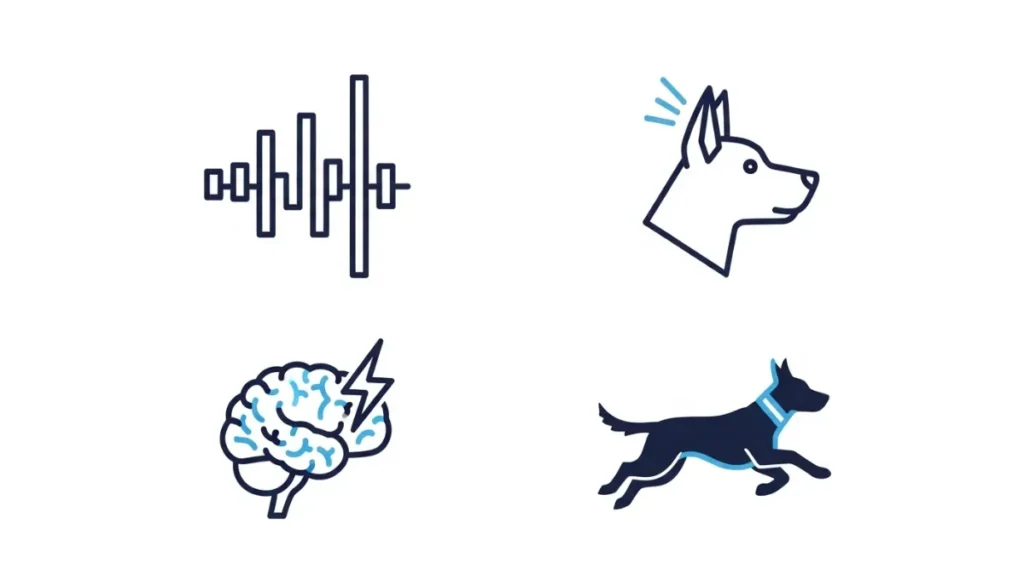
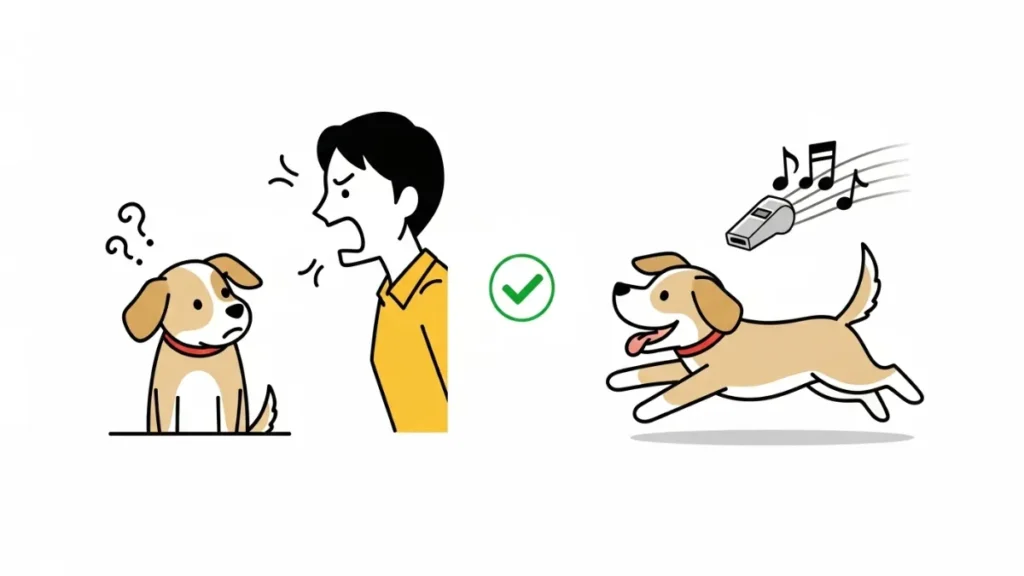
Here’s what most San Diego dog owners don’t realize—your voice changes with emotion. When you’re panicked because your dog is chasing a skateboarder down the Pacific Beach boardwalk, your recall command sounds completely different than during practice. Dogs get confused.
A whistle sounds identical every single time. Whether you’re calm, stressed, or out of breath from hiking Cowles Mountain, that whistle produces the same exact frequency. Your dog’s brain recognizes it instantly.
The science is fascinating. Dogs hear frequencies up to 45,000 Hz, while humans max out around 20,000 Hz. Dog training with whistle taps into this superior hearing range. My whistle reaches dogs who seem “deaf” to voice commands.
Getting Started with Dog Training with Whistle: The First Week
Last month, a frustrated owner from La Jolla brought me her Goldendoodle, Mango. “He knows ‘come’ perfectly at home,” she explained, “but at the dog park? Forget it.” Sound familiar?
We started whistle training that afternoon. Within one week, Mango was responding to the whistle from across Grape Street Dog Park, ignoring every distraction. Here’s exactly how we did it.
Choosing Your Whistle for Dog Training with Whistle Success
Not all whistles work equally. I’ve tested dozens over the years. Skip the cheap plastic ones—they break, and their sound varies. My recommendation? A quality metal whistle like the Acme 211.5 (about $15).
Silent whistles seem appealing, but I prefer audible ones. You need to hear what your dog hears. Plus, in emergencies, other people can use your whistle if needed. I keep three identical whistles—one in my car, one at home, one in my training bag.
The Foundation: Making Dog Training with Whistle Irresistible
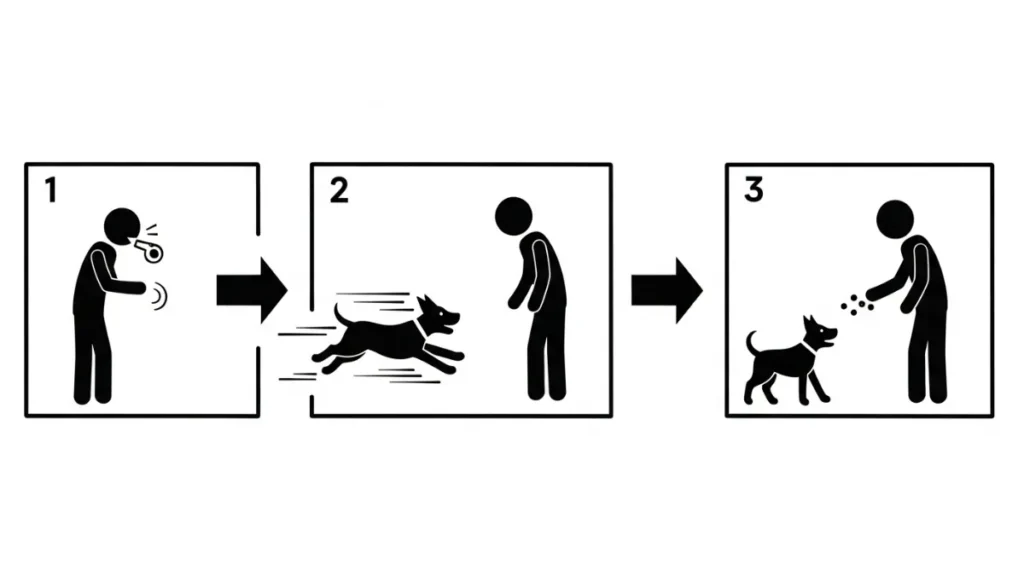
Before any outdoor practice, we create a powerful positive association. This is where most dog training with whistle attempts fail—people skip straight to recall without building value first.
Start in your kitchen. Blow the whistle once (just once!) and immediately drop five amazing treats on the floor. I’m talking the good stuff—cheese, chicken, hot dogs. Your dog should think they won the lottery. Repeat this 10 times throughout the day, different rooms, random times.
By day three, your dog should race to you at the whistle sound, even from sleep. That’s when you know the association is solid. My rescue dog, Canela, literally dreams about whistle time—her legs twitch and she makes happy noises.
The Pattern That Changes Everything
Here’s my secret sequence for dog training with whistle:
- One long blast = come immediately
- Two short blasts = stop and look at me
- Three short blasts = change direction
Keep it simple. Dogs don’t need complex patterns. Consistency matters more than creativity. Practice inside for a full week before moving to your backyard.
Taking Dog Training with Whistle to San Diego Streets
The real test comes outside. Start small—your driveway, then your street, then a quiet corner of your neighborhood park. Don’t rush to Dog Beach or Fiesta Island yet. That’s like taking someone who just learned to swim and dropping them in the ocean.
I made this mistake with a client’s Husky in Mission Bay. Too much too soon. The dog got overwhelmed, ignored the whistle, and we had to rebuild from scratch. Learn from my error—gradual progression wins.
Proofing Your Dog Training with Whistle in Distractions
Once your dog masters quiet areas, add distractions systematically:
- Week 1: Practice near parked cars
- Week 2: Add distant dog walkers
- Week 3: Try near playgrounds (stay outside fence)
- Week 4: Attempt dog park perimeter
- Week 5: Enter dog park during quiet hours
Each success builds confidence. Document progress with videos—you’ll be amazed reviewing them later.
Advanced Dog Training with Whistle Techniques
After mastering basic recall, dog training with whistle opens incredible possibilities. I’ve taught dogs to:
- Find their owners in crowds using whistle patterns
- Stop chasing wildlife instantly
- Return from half-mile distances
- Navigate back through dense trails
One memorable success: a deaf Dalmatian named Spot from Encinitas. His owner thought training was impossible. We used whistle vibrations (he felt them through the ground) combined with hand signals. Now Spot has better recall than most hearing dogs.
Emergency Situations Where Dog Training with Whistle Saves Lives
Real story from last summer—a client’s Labrador, Buddy, slipped out during a Carmel Valley house party. Guests had left the gate open. Buddy bolted toward busy Carmel Mountain Road during rush hour.
The owner grabbed my emergency whistle from her key chain. One long blast. Buddy stopped mid-street, turned, and sprinted back. The whistle’s unique sound cut through traffic noise where voice commands would’ve been useless.
This is why I insist every Doggies University graduate carries a whistle. It’s your emergency brake when everything goes wrong.
Common Dog Training with Whistle Mistakes to Avoid
Through years of teaching dog training with whistle, I’ve seen every possible error. The biggest? Overusing the whistle. It’s not a magic wand—it’s a specific tool for specific situations.
Never use the whistle for:
- Basic obedience (sit, stay, down)
- Corrections or punishment
- Getting attention for fun
- Multiple commands in sequence
Think of it as your emergency recall system. The more special it remains, the more powerful it stays.
When Dog Training with Whistle Doesn’t Work
Sometimes dogs don’t respond to whistles. Usually, it’s because:
- Negative associations – Previous owners used ultrasonic bark deterrents
- Hearing issues – More common in senior dogs
- Overwhelming fear – Anxiety overrides training
- Inconsistent practice – Sporadic training confuses dogs
If your dog seems whistle-resistant, don’t force it. We have alternative methods at Doggies University’s special needs program.
Building Distance with Dog Training with Whistle
The magic of dog training with whistle really shines at distance. Voice commands lose power beyond 50 feet, especially with wind or ambient noise. But a whistle? I’ve successfully recalled dogs from 400+ yards at Fiesta Island.
Start extending distance gradually:
- 10 feet (living room length)
- 25 feet (backyard width)
- 50 feet (half tennis court)
- 100 feet (baseball baseline)
- 200+ feet (football field)
Always practice with a long line initially. Safety first, always. San Diego’s open spaces are beautiful but can be dangerous for untrained dogs.
Real Success Stories: Dog Training with Whistle Transformations
Let me share three quick transformations from this year:
Max the Escape Artist (Golden Retriever, Del Mar): Scaled 6-foot fences regularly. After whistle training, he stops mid-climb when he hears the signal. His owner cried during our final session.
Luna the Selective Listener (Shiba Inu, Hillcrest): Ignored every command when “busy.” Now responds to whistle even while chasing squirrels. We practiced at Balboa Park’s squirrel-heavy areas.
Duke the Beach Runner (Weimaraner, Ocean Beach): Used to disappear for 30+ minutes at Dog Beach. Now checks in every few minutes automatically after whistle conditioning.
Your Dog Training with Whistle Journey Starts Now
Dog training with whistle isn’t just another technique—it’s your insurance policy for your dog’s safety. In our beautiful but busy San Diego, where beaches meet cliffs and parks border highways, reliable recall can literally save lives.
Start today. Get a quality whistle (metal, not plastic). Practice in your kitchen. Build that golden association. Within weeks, you’ll have what money can’t buy—a dog who comes flying back every single time, no matter what.
Ready to master whistle training with professional guidance? Visit our whistle training workshop schedule for hands-on practice with other San Diego dog owners. Because sometimes, the smallest tools make the biggest difference.
Maria Elena Rodriguez is the founder of Doggies University in San Diego, specializing in practical, life-saving training techniques. For personalized whistle training plans, visit doggiesuniversity.com
