


No products in the cart.

Pomeranian Training: Big Personality in a Small Package
The Pomeranian Personality
Do not let their diminutive size fool you; the pomeranian is a descendant of large, powerful Arctic sled dogs. This heritage gives them an incredibly bold, confident, and sometimes bossy personality. They are incredibly intelligent and highly trainable, but if they are not provided with consistent boundaries, they can quickly develop “small dog syndrome.”
Because they are so alert and deeply bonded to their owners, they make excellent watchdogs. However, this alertness can easily cross the line into incessant nuisance barking if they are not taught how to settle and self-soothe. They require an owner who is willing to treat them like a “real dog,” rather than a fragile accessory.
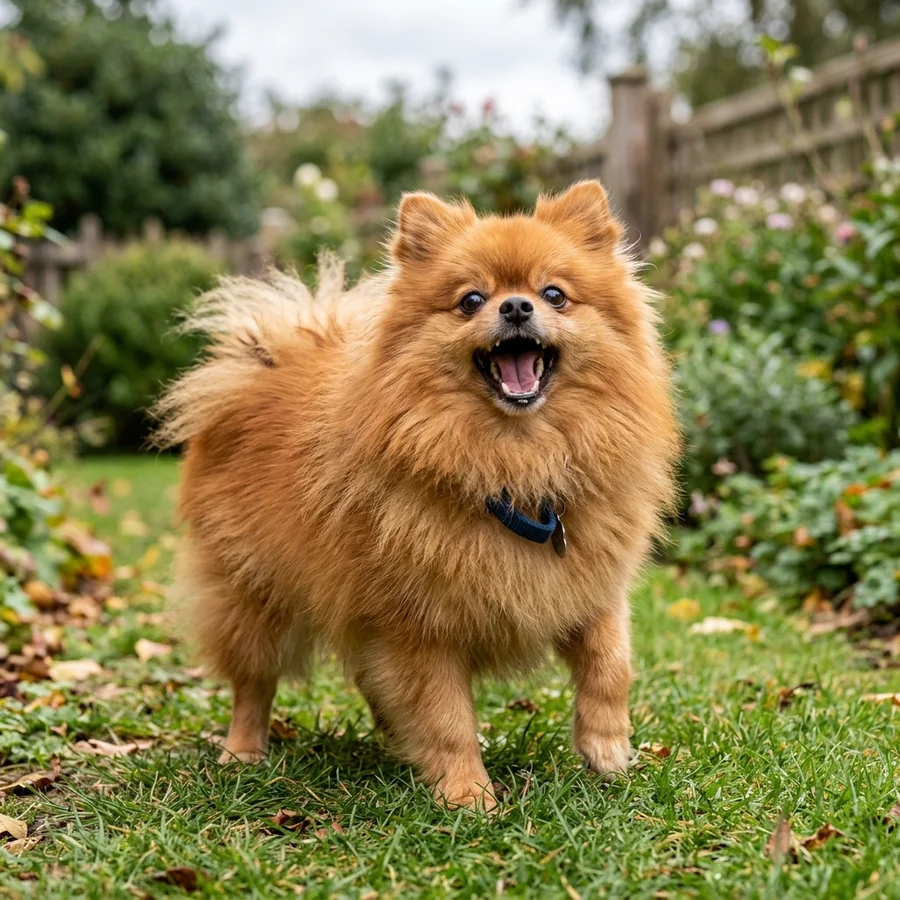
Managing the Barking
A pomeranian will bark at everything: the mail carrier, a leaf blowing across the yard, or a strange noise on the television. You cannot completely train the bark out of this breed, as it is genetically hardwired. Instead, the goal is to manage it using positive reinforcement.
Teach the “Quiet” command. When they bark at the window, acknowledge the trigger by saying “Thank you!” and then asking for a “Sit.” The moment they stop barking to sit, reward them generously. Over time, they learn that alerting you once is acceptable, but continuing to bark is not rewarding.
Tracheal Collapse and Harness Training
One of the most critical aspects of owning a pomeranian is protecting their fragile neck. Toy breeds are highly susceptible to a medical condition called collapsed trachea. Because of this, you should never walk a pomeranian attached to a standard neck collar.

You must invest in a well-fitting, comfortable body harness that distributes the pressure across their chest. Getting them accustomed to a harness should happen early in the puppy development timeline. Furthermore, you should strongly consider group training classes to teach them proper loose-leash walking, ensuring they do not pull against the harness and cause unnecessary strain on their tiny bodies.
Conclusion
Training a pomeranian is a delightful experience if you are willing to embrace their spunky attitude and set firm, loving boundaries. By protecting their physical health with a harness and channeling their mental energy through obedience training, you will have a brilliant and entertaining companion for years to come.
