


No products in the cart.
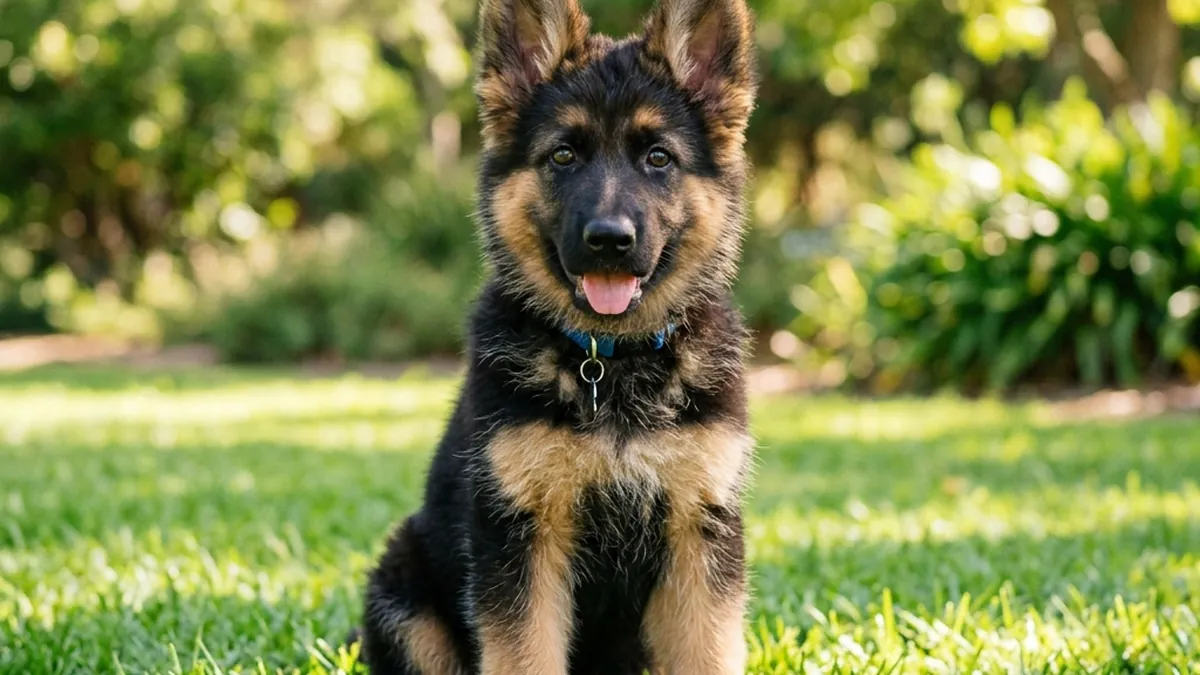
Training a German Shepherd Puppy: A Guide for Success
Bringing home a German Shepherd puppy is an incredibly exciting event. They are brilliant, fiercely loyal, and stunningly beautiful dogs. However, training a German Shepherd puppy is not a task for the faint of heart. Because they are a highly intelligent working breed, they require a structured, consistent, and confident owner.
Without proper training and socialization, a German Shepherd puppy can quickly develop behavioral issues like leash reactivity, resource guarding, or anxiety. In this guide, we will cover the essential milestones you must hit during your GSD’s first year to ensure they grow into a balanced, well-behaved adult dog.
The Critical Socialization Window
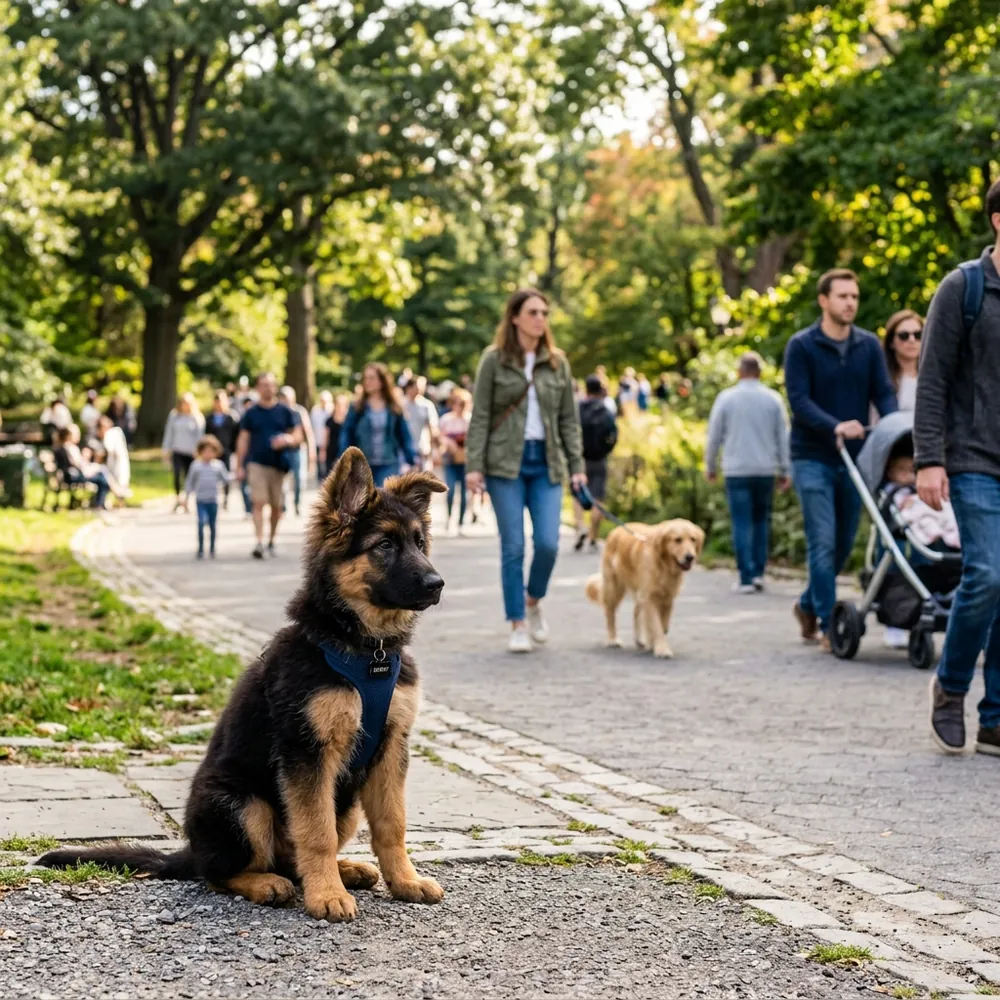
For German Shepherds, the socialization window between 8 and 16 weeks of age is the most critical period of their lives. German Shepherds are genetically predisposed to be aloof and protective. If they are not exposed to a wide variety of people, environments, and noises early on, that aloofness will turn into fear-based aggression.
- Quality Over Quantity: Socialization does not mean letting strangers pet your puppy. It means exposing your puppy to strangers and teaching them to remain calm and focused on you.
- Novel Surfaces: Walk your puppy over grates, hardwood floors, wet grass, and gravel. A confident dog is not afraid of their environment.
- Handling Exercises: Gently touch your puppy’s paws, ears, and mouth daily, rewarding them with treats. This makes future veterinary visits significantly less stressful.
Essential Obedience Commands for GSDs
1. The Recall (Come)
A reliable recall is non-negotiable for a large breed dog. Never call your German Shepherd to you to punish them or to do something unpleasant (like giving a bath). The word “come” should always equal the best party in the world.
2. Loose Leash Walking
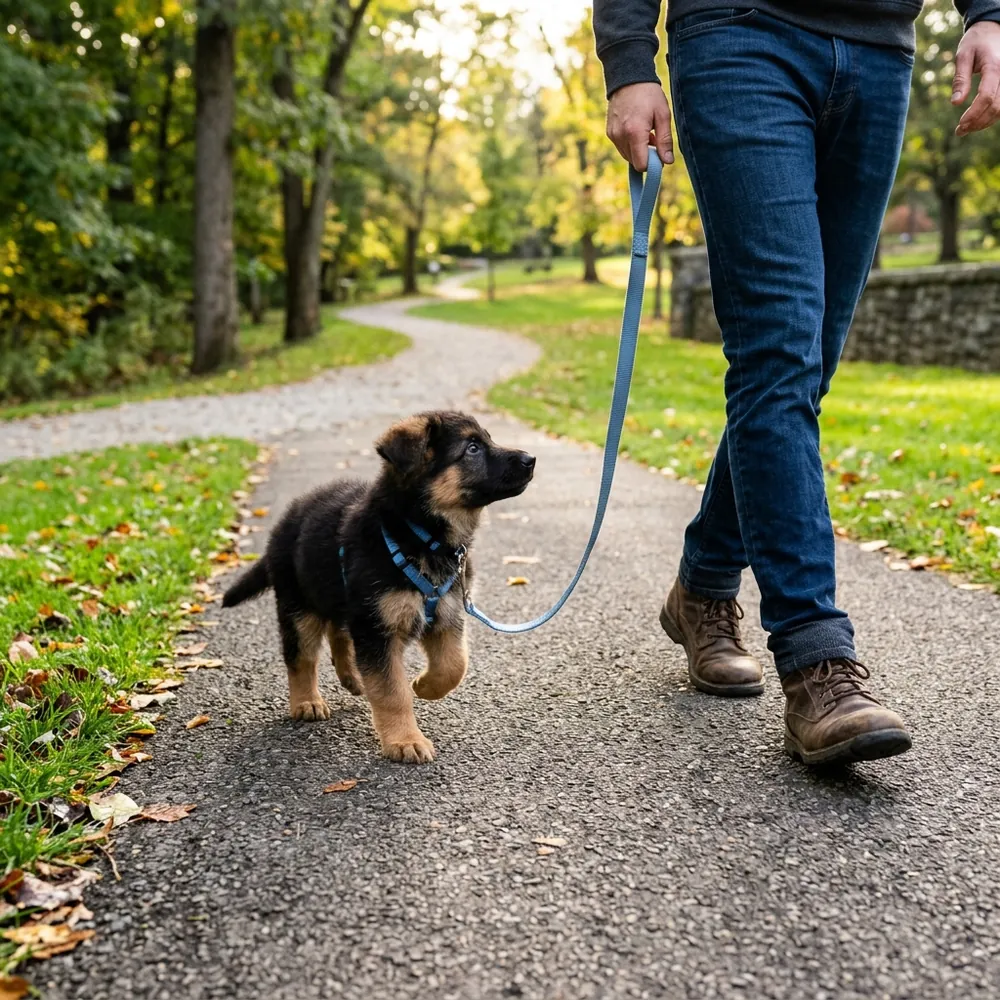
A full-grown German Shepherd can easily weigh 90 pounds. If they pull on the leash, they can pull you to the ground. Start loose leash training on day one. If the leash goes tight, you stop walking. When the dog returns to your side and the leash loosens, the walk continues.
Mental Stimulation vs. Physical Exercise
A common mistake GSD owners make is trying to physically exhaust their puppy. Not only is excessive running bad for a growing puppy’s joints (especially their hips), but it also builds an athletic dog with immense stamina. Instead, focus on mental stimulation. Ten minutes of teaching a new trick or doing scent work will tire out a German Shepherd faster than a two-mile walk.
Frequently Asked Questions (FAQ)
When do German Shepherd puppies calm down?
German Shepherds are a late-maturing breed. You will typically see a decrease in puppy energy around 18 to 24 months. However, they will always require a “job” to do, whether that’s advanced obedience, agility, or simply carrying a backpack on walks.
Are German Shepherds good with kids?
Yes, when raised with children from a young age and properly socialized, GSDs make excellent family dogs. However, due to their herding instincts, they may try to “herd” or nip at running children, which must be immediately redirected to an appropriate toy.
